
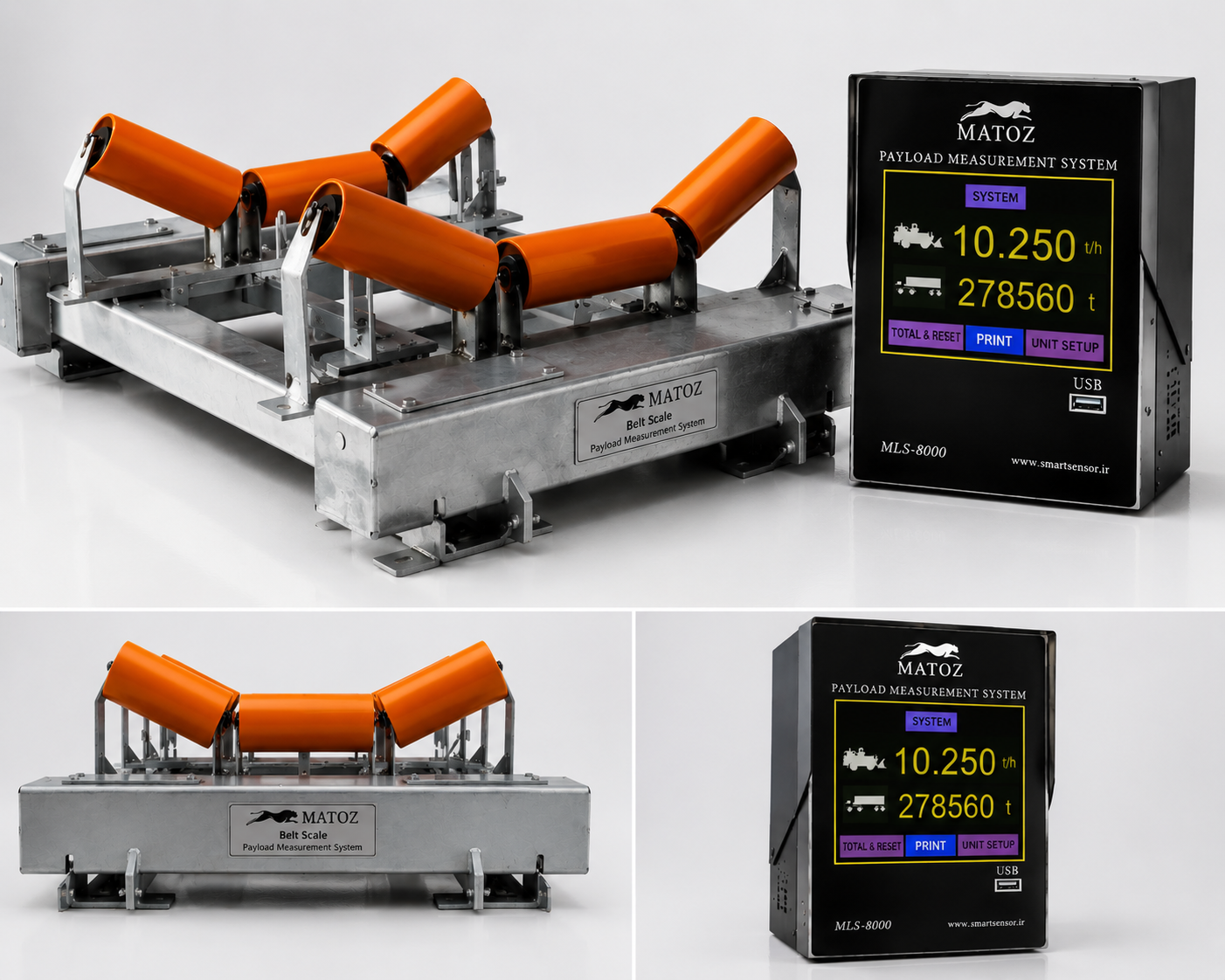
Industrial Belt Scale and Conveyor Weighing Systems
A Belt Scale, also known as a Conveyor Belt Scale or Conveyor Weighing System, is a highly efficient industrial weighing solution designed to continuously measure the flow rate and total quantity of bulk materials transported on conveyor belts. Belt scales are widely used in mining, cement plants, aggregate processing, steel production, food industries, ports, and material handling facilities where accurate weighing and production monitoring are essential.By integrating high-precision load cells, speed sensors, and advanced weight indicators, a belt scale provides real-time measurement of material flow and totalized weight without interrupting production. This allows operators to improve inventory control, optimize production processes, reduce material loss, and increase operational efficiency.
How Does a Belt Scale Work?
A belt scale operates by measuring the load carried on a section of the conveyor belt while simultaneously monitoring the belt speed. The system calculates the mass flow rate and total material throughput using data collected from load cells and speed sensors.The measured data can be displayed locally on a weight indicator or transmitted to PLC, SCADA, and industrial automation systems for monitoring, reporting, and process control.
Key Features
High weighing accuracy for continuous material flow measurement
Heavy-duty industrial construction
Reliable operation in harsh environments
Advanced load cell technology
Real-time production monitoring
Integration with PLC and automation systems
Data logging and reporting capabilities
Easy calibration and maintenance
Suitable for new and existing conveyor installations
Applications of Belt Scales
Mining Industry
Belt scales are extensively used in mining operations to monitor ore extraction, material transportation, and production output. Accurate weighing helps improve productivity and inventory management while reducing losses.
Cement Plants
In cement manufacturing facilities, conveyor belt scales provide precise measurement of raw materials and finished products, ensuring efficient process control and production consistency.
Aggregate and Quarry Operations
Quarries and aggregate plants rely on belt scales to measure stone, sand, gravel, and other bulk materials transported through conveyor systems.
Food Processing
Food manufacturers use conveyor weighing systems for continuous monitoring of ingredients and finished products to maintain quality standards and production accuracy.
Ports and Bulk Material Handling
Belt scales are ideal for loading and unloading operations involving coal, grain, fertilizers, minerals, and other bulk commodities.
Advantages of Installing a Belt Scale
Installing a conveyor belt scale provides several operational and financial benefits:
Improved production control
Reduced material waste
Accurate inventory management
Better process optimization
Increased profitability
Enhanced operational efficiency
Real-time production reporting
Reduced human error
Lower maintenance costs
Belt Scale Components
A complete conveyor weighing system typically consists of:
Load Cells
Load cells are the primary sensing elements responsible for measuring the weight of material carried by the conveyor belt. High-quality industrial load cells ensure accurate and stable performance under demanding conditions.
Speed Sensor
The speed sensor continuously measures conveyor belt speed and provides essential data for calculating material flow rates.
Weight Indicator
The weight indicator processes signals from the load cells and speed sensor to calculate flow rate, totalized weight, and production data.
Mounting Structure
A robust weighing frame supports the load cells and integrates seamlessly into the conveyor structure.
Accuracy and Reliability
Modern belt scales are designed to deliver excellent accuracy and long-term reliability. Proper installation, calibration, and maintenance ensure consistent performance even in challenging industrial environments.
Factors affecting belt scale accuracy include:
Conveyor condition
Material characteristics
Belt tension
Installation quality
Calibration procedures
Our engineering team carefully evaluates these factors to provide the most accurate and reliable weighing solution for each application.
Custom Belt Scale Solutions
Every industrial process has unique requirements. We provide customized belt scale solutions tailored to specific conveyor configurations, capacities, environmental conditions, and operational needs.Whether you require a weighing system for mining, cement production, food processing, or bulk material handling, our team can design and implement the right solution.
Installation and Calibration Services
Proper installation and calibration are critical for achieving maximum accuracy. Our services include:
Site inspection and consultation
System design
Mechanical installation
Electrical integration
Calibration and testing
Operator training
Maintenance support
Why Choose Our Belt Scale Systems?
We provide reliable industrial weighing solutions designed for long-term performance and accuracy. Our belt scales are built using high-quality components and advanced weighing technology to ensure dependable operation in demanding industrial applications.With extensive experience in industrial weighing systems, load cells, and conveyor applications, we help customers improve productivity, reduce waste, and achieve better process control.
Frequently Asked Questions
What is a belt scale used for?
A belt scale is used to continuously measure the weight and flow rate of materials transported on conveyor belts.
Can a belt scale be installed on an existing conveyor?
Yes. Most belt scale systems can be installed on existing conveyor structures with minimal modifications.
How accurate is a conveyor belt scale?
Accuracy depends on system design, installation quality, and calibration. Properly installed systems can achieve very high measurement accuracy.
What industries use conveyor belt scales?
Mining, cement, aggregates, food processing, ports, steel plants, chemical industries, and many other bulk material handling applications use conveyor belt scales.
How often should a belt scale be calibrated?
Regular inspection and periodic calibration are recommended to maintain optimum performance and measurement accuracy.
Other Prodoucts
